_0005.jpg)
Porsche 550 Spyder
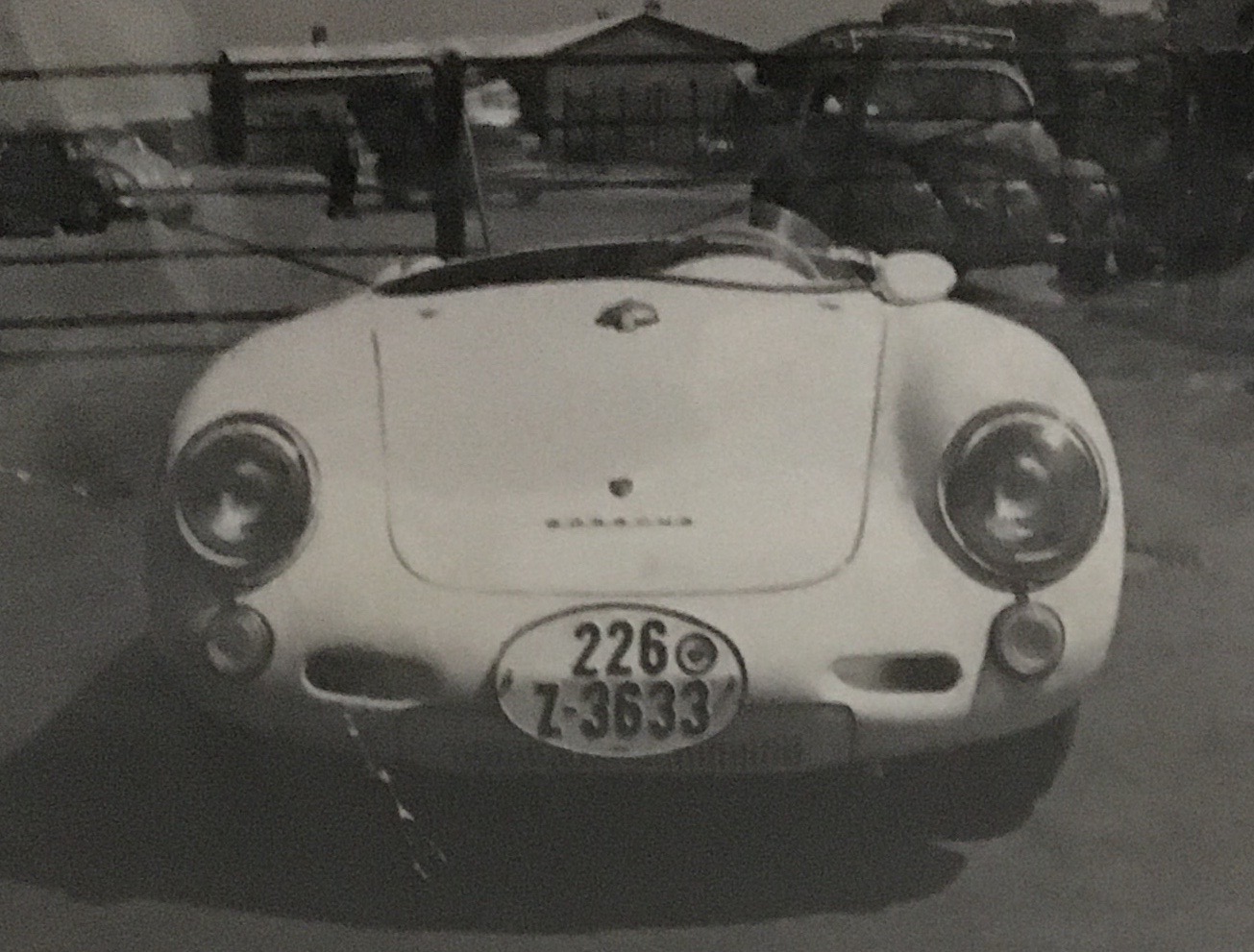
William "Bill" Buffs original Porsche 550 Spyder

Model

Category

Year of construction

Weight

Horsepower

Cylinder Capacity
The Porsche 550 Spyder, introduced in 1953, was Porsche’s first purpose-built race car, designed with a lightweight body and mid-engine layout for optimal handling and performance. Powered by the innovative 1.5-liter four-cam “Fuhrmann” engine, the 550 quickly earned a legendary status with class wins at Le Mans, the Carrera Panamericana, and countless other events.


Model History
The Porsche 550 Spyder, introduced in 1953, marked a pivotal moment in Porsche’s motorsport legacy, being the brand’s first car designed exclusively for racing. Its low, aerodynamic body and mid-engine layout were engineered to deliver optimal weight distribution and handling on demanding circuits, contributing to its immediate success in international competition.
Inside, the 550 featured a minimalist, purpose-built cockpit designed to keep weight down while ensuring the driver’s focus remained on performance. A single lightweight bucket seat, essential instrumentation, and a fixed steering wheel exemplified the car’s uncompromising racing intent. The chassis was a tubular space frame construction, paired with torsion bar suspension and drum brakes, which together provided balance and agility unmatched in its class.
Powering the 550 was the groundbreaking 1.5-liter four-cam flat-four engine—known as the “Fuhrmann” engine—delivering around 110 horsepower in early versions. This compact yet complex unit utilized dual overhead camshafts per cylinder bank and a dry-sump system, enabling high revs and consistent oil pressure under racing conditions. Combined with a 4-speed manual gearbox, the 550 was capable of remarkable performance relative to its displacement.
The Porsche 550 quickly made its mark, achieving class wins at the 24 Hours of Le Mans, the Carrera Panamericana, and countless other road races, firmly establishing Porsche as a force in global motorsport. With fewer than 100 units built, its rarity, performance pedigree, and elegant simplicity continue to make the 550 one of the most revered sports racers in history.


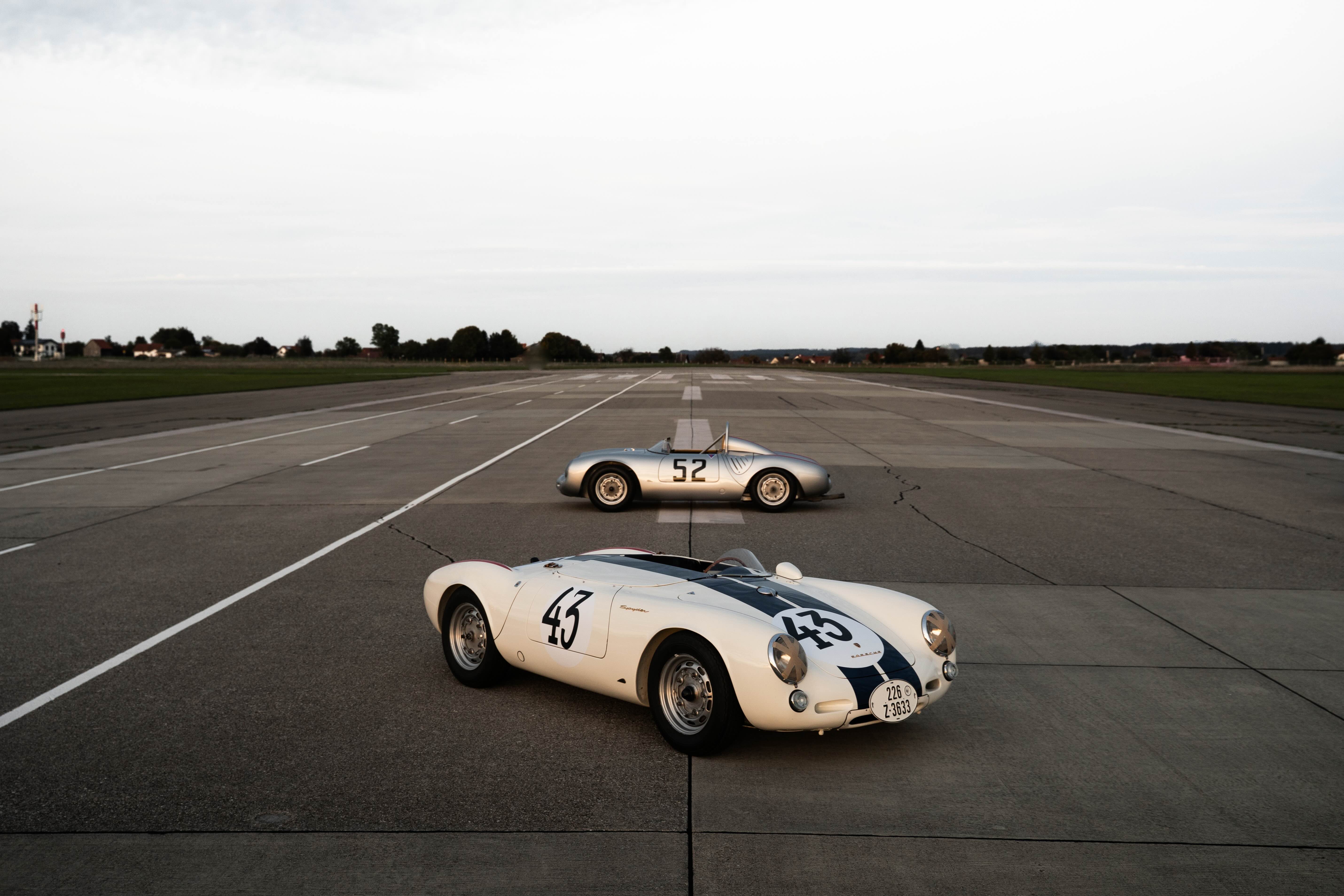

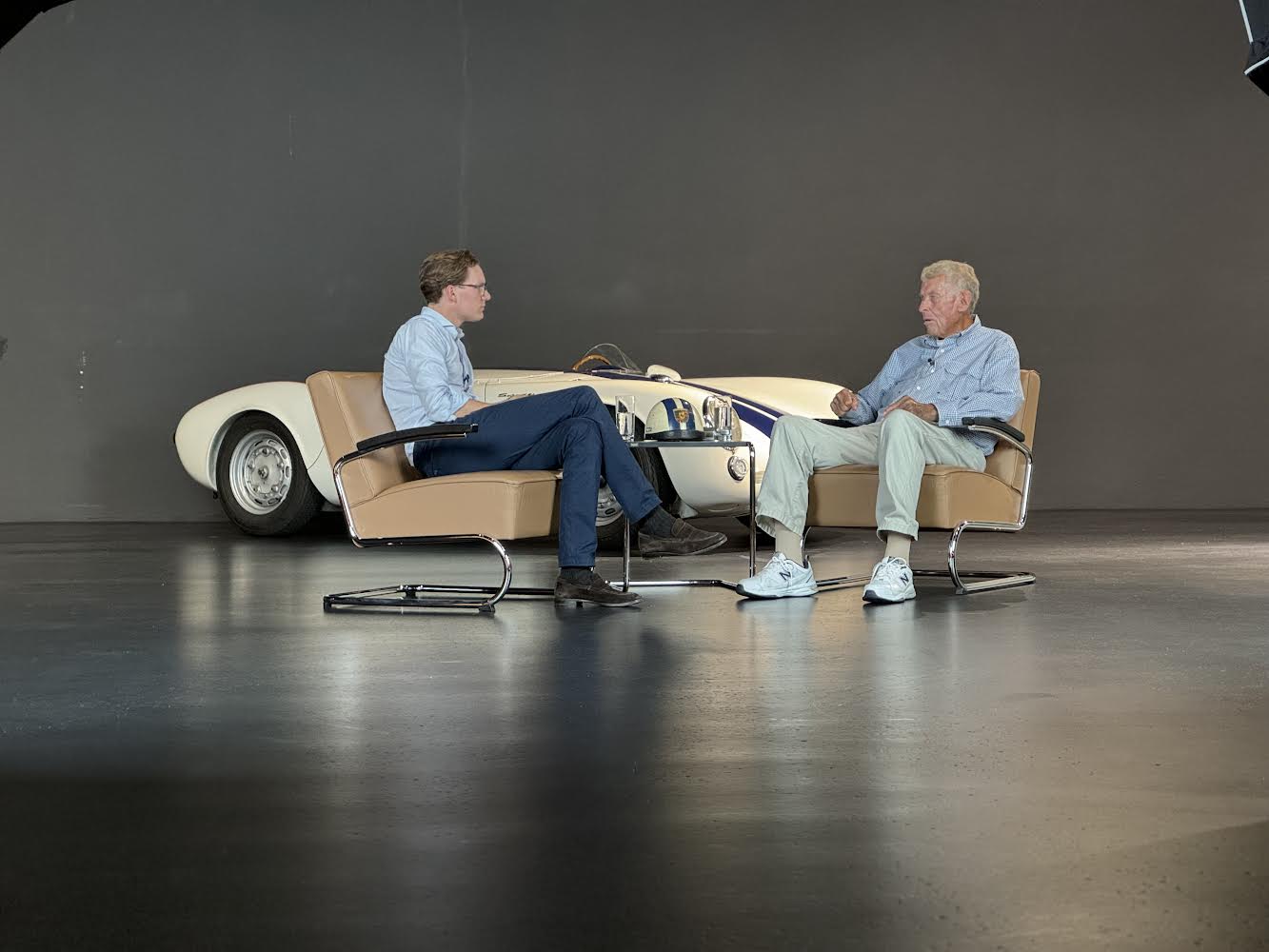
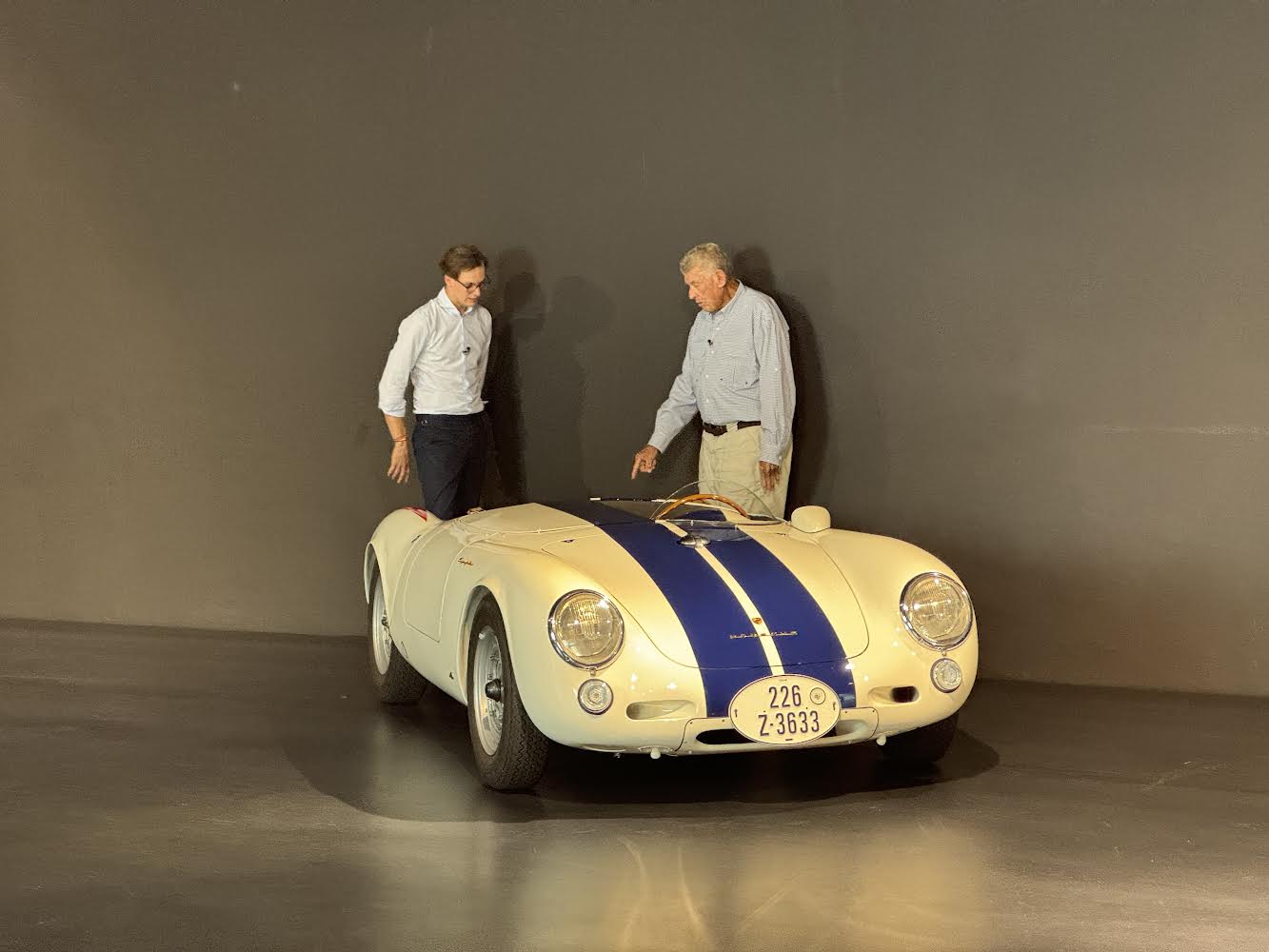
Chassis #0081
In 1956, a determined 20-year-old named William “Bill” Buff traveled from New Jersey to Germany to begin a life-changing chapter. Trained at the Porsche factory in Stuttgart as a "Spezialist" for his father’s VW/Porsche dealership, Buff Motors, Bill wasn't just any apprentice—he personally assembled the very car that would define his early racing career: Porsche 550 Spyder chassis #0081.
With barely enough money to get by, but armed with sheer talent and passion, Bill raced 550-0081 across Europe. He famously drove the car to the track, raced it, and then drove it home—often living off his prize winnings. His tenacity earned him the affectionate nickname “Buffalo Bill” from Porsche racing legend Huschke von Hanstein.
In August 1956, Bill and co-driver Richard von Frankenberg secured 1st in class and 8th overall at the GP Sveriges 1000km in Kristianstad. Just a week later, Bill claimed another class win at the GP Denmark in Roskilde, all behind the wheel of his self-built Spyder, still bearing its license plate: 226-Z-3633.
In 1957, Bill returned to the U.S., bringing the car with him. He continued racing it stateside, including a strong performance at Daytona’s NASCAR Speedweek where he achieved 1st in class and hit a remarkable top speed of 136 mph. At the end of that year, the car passed to another legend—Vasek Polak—and remained in good hands for decades.
In a heartwarming full-circle moment, 67 years later in 2024, Bill Buff was reunited with 550-0081. Seeing the car he built and raced as a young man sparked an emotional return, crowned by the unforgettable moment when he climbed back into the driver’s seat, fired up the engine, and drove it once again.
Lorem ipsum dolor sit amet, consectetur adipiscing elit, sed do eiusmod tempor incididunt ut labore et dolore magna aliqua. Ut enim ad minim veniam, quis nostrud exercitation ullamco laboris nisi ut aliquip ex ea commodo consequat. Duis aute irure dolor in reprehenderit in voluptate velit esse cillum dolore eu fugiat nulla pariatur.
- Item A
- Item B
- Item C
Race History
Gallery